


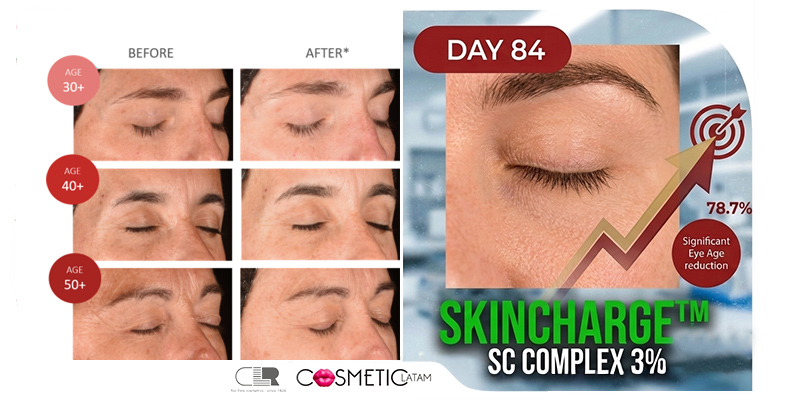
It is now possible to reverse digital aging by protecting the skin in the screen era.
A new scientific analysis reveals how to reverse screen-induced collagen and elastin degradation using SkinCharge CLR™ by CLR.
The past decades have been defined by a surge in the use of everyday technologies. Fueled further by the pandemic and rapid technological advancements, the proportion of our lives spent in digital environments has increased massively.
Studies on social behavior indicate that individuals, particularly younger generations, spend a considerable amount of time online, highlighting a trend of increasing digital reliance (1).
Digital Resilience: Shielding Dermal Integrity Against Screen Stress
It is only natural that this increase in digital consumption affects diverse daily activities, influencing our rhythms, sleep, biological processes, and ultimately our appearance and mental state. Since sleep is our primary resource to recharge and regenerate our entire system, studies have indicated that even the presence of screens in the bedroom and increased screen time are associated with shorter sleep durations and insufficient rest (2).
Social research addresses this topic across various aspects of daily life, increasingly highlighting how this pronounced digital lifestyle affects different age groups both physically and socially.
SkinCharge CLR™ was developed as an active ingredient for individuals who inevitably spend a significant portion of their daily lives in front of a screen. It highlights the effects that this behavior can have on the skin and offers an opportunity to develop a conscious attitude and a more effective approach to skincare.
Effects on the Skin and Body Due to Increased Screen Time
Consumers increasingly recognize that skincare cannot be viewed in isolation from social behavior and individual lifestyle. A skincare product is now seen as part of a mechanism for self-analysis, self-optimization, and personal projection, identifying the causes of potential skin problems or discomfort at various levels.
Users’ newfound curiosity in exploring holistic well-being is driving the need for cosmetic products that do not just support fundamental skin biology but also address the real-world conditions in which a product’s effectiveness should be noticeable and perceivably beneficial.
The physical effects of spending long periods in front of screens occur on both conscious and subconscious levels. Physically, our eyes are directly affected when our lifestyle involves prolonged consumption of digital content.
Excessive use of digital devices leads to a reduced blink frequency and incomplete blinking, which exacerbates ocular surface dryness and discomfort. This phenomenon is increasingly recognized as a consequence of modern digital habits (3).
It is also evident that this recurring digital eye strain extends beyond the eye area, affecting the sensitive, thin skin around our eyes. Increased rubbing and strained, tired eyes result from behavioral patterns that are difficult to break, leading to a sense of exhaustion and unconscious malaise. In some cases, depending on behavior and predisposition, this can result in an increased inflammatory environment in the eye area that spreads to surrounding tissues. This inflammatory response can cause structural changes in the skin, including thinning and loss of elasticity, making it more susceptible to damage (4).
To address skin longevity in the digital age, one must understand the factors that accelerate skin aging in connection with a digital lifestyle. Repeated patterns of facial expressions and distortions caused by unconscious facial tension due to prolonged screen use become etched into the face over time.
As a result, the formation of wrinkles, dehydration lines, loss of firmness, and reduced tightness are the visual expressions of how we treat our faces day after day. Like a cascade, these muscular changes spread across the entire face, the shoulder and neck area, and thus our general physiology.
Increased screen use goes hand in hand with reduced physical activity (5), which can further accelerate aging, inflammatory mechanisms, and mental imbalance.
Given that these new patterns of behavior are firmly anchored in our social lives and avoiding them is only possible to a limited extent, consumers need to understand how to best support their skin. The focus is on a new kind of digital resilience that helps consumers manage their time independently, integrate active “off-times,” and maintain the condition of their skin regardless of their daily habits.
Reversing Digital Aging with Vicia faba Extracts
SkinCharge CLR™ (SC Complex, INCI: Hydrolyzed Vicia Faba Seed Protein) is obtained through a careful extraction and hydrolysis of the seeds of Vicia faba. As a plant, Vicia faba constantly adapts to daylight and darkness; this diurnal rhythm is visible in how its stomata open in the morning and close at night.
These day-night changes are tightly linked to photosynthesis and carbohydrate metabolism, allowing the plant to efficiently coordinate gas exchange and water use over a 24-hour cycle. Under solar radiation, Vicia faba upregulates protective compounds, increasing UV-absorbing pigments in epidermal tissues to shield photosynthetic structures and genetic material from damage.
This natural strategy of forming a protective interface at the tissue surface offers a compelling conceptual parallel for the topical use of Vicia faba seed-derived fractions, aimed at supporting skin resilience against excessive daily screen time.
Studies with SC Complex were performed on consumer groups of all ages, all with elevated daily screen time. Anti-aging parameters—starting from the eyes and radiating across the entire face—are brought into real-world context under the light of digital longevity. SC Complex demonstrated a reduction in skin aging features in people with elevated screen time to levels comparable to those with low daily screen exposure.
Efficacy
In Vivo Testing: Reversing Digital Aging in 3 Months
Increase of Essential Dermal Compounds
A stable, structurally defined, and youthful-looking skin is based on an organized network of essential proteins in the dermis. In in vitro studies, SC Complex optimally stimulated Collagen I and III, Elastin, and LOX (lysyl oxidase) to counteract structural loss caused by stress-related influences.
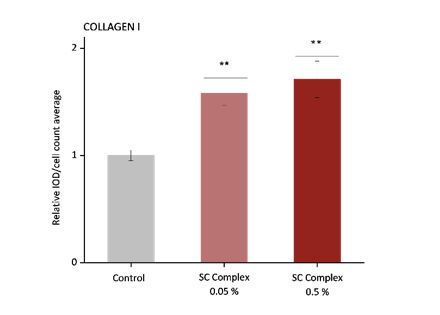
Figure 1: Treatment with SC Complex significantly increases Collagen Type I.
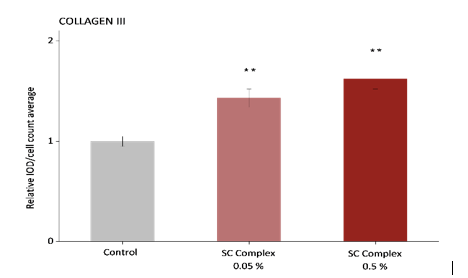
Figure 2: Treatment with SC Complex significantly increases Collagen III.
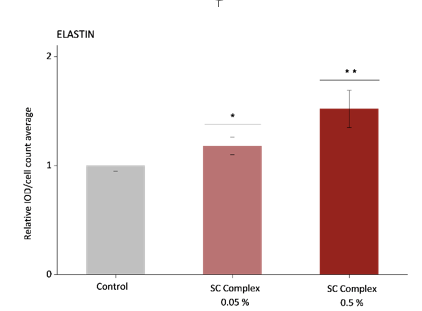
Figure 3: Treatment with SC Complex significantly increases Elastin.
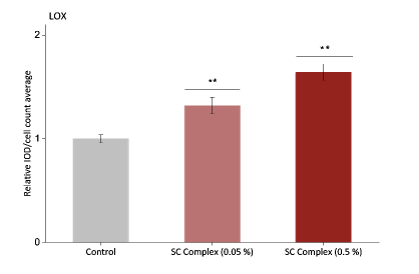
Figure 4: Treatment with SC Complex significantly increases LOX.
Reduction of the degradation of essential dermal compounds
In further experiments, the gene expression of MMP-1, MMP-3, and MMP-9 was investigated. Elevated expression of these genes is strongly associated with increased degradation of the dermal components that provide the skin with its firmness and elasticity (6).
MMP-1 can cleave collagen types I and III. MMP-3 has a broader spectrum of action (acting on proteoglycans, fibronectin, and non-fibrillar collagens). MMP-9 degrades basement membrane collagen types IV and V, as well as elastin.
Method:
Fibroblasts from a 39-year-old female volunteer were incubated with SC Complex (control (0%) and 0.1%). Following RNA extraction and reverse transcription into cDNA, quantitative fluorescence PCR was performed.
Results: The active ingredient (Hydrolyzed Vicia faba) inhibits the expression of MMP-1, -3, and -9
For each of the MMPs, treatment with SC Complex led to a reduction in expression (see Figures 5, 6, and 7).
SC Complex demonstrates a protective effect against the degradation of numerous dermal compounds, indicating that it protects against the loss of skin firmness and elasticity and the formation of wrinkles.
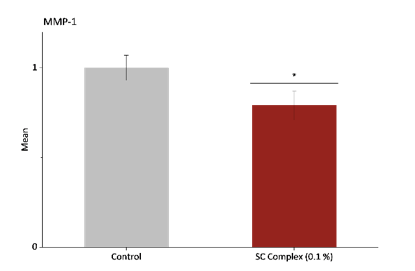
Figure 5: Treatment with the SC complex significantly reduces MMP-1 expression.
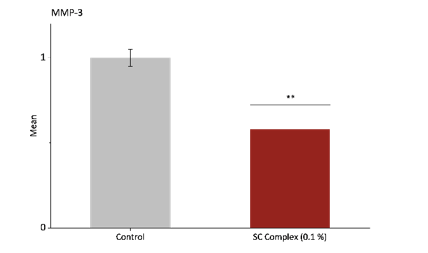
Figure 6: Treatment with the SC complex significantly reduces MMP-3 expression.
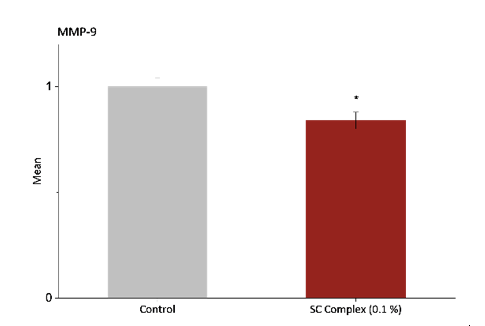
Figure 7: Treatment with the SC complex significantly reduces MMP-9 expression.
Ex vivo studies for dermal integrity
Increase of essential dermal compounds
To obtain more information on the real-life effectiveness of SkinCharge CLR™, further studies were performed on human skin explants where SC Complex was applied topically.
Method:
Human skin explants were transferred into a 6-well plate, and 3.7 ml culture solution was added to each well for further culture at 37 ℃ at 5% CO2, where the culture solution was changed every day for 2 days.
After these 2 days the skin explants were irradiated with 30 J/cm2 UVA and 50 mJ/cm2 UVB. Then the cell culture medium was refreshed, after which SC Complex (3%) was applied topically on the skin explant.
Subsequently the skin explants were incubated for 24 hours at 37 °C and 5% CO2. The above-described cycle of irradiation, refreshing of the culture medium, and the topical application of SC Complex was performed a total of 5 times. Then the skin explants were further treated topically with SC Complex for another 3 days, applied daily.
Afterwards, the skin explants were taken for detection and fixed with 4% paraformaldehyde. After 24 hours of fixation, immunofluorescence detection was performed and pictures were taken under a microscope, with images being collected and analyzed.
Results:
It could be shown that the topical treatment of human skin explants with SC Complex is associated with a clearly higher presence of fibulin-5, fibrillin-1, elastin, collagen I, collagen III and collagen XVII (see figure 8). These results convincingly show that the treatment of skin with SC Complex indeed empowers the skin to produce dermal compounds which are indispensable for the maintenance of skin firmness and elasticity.
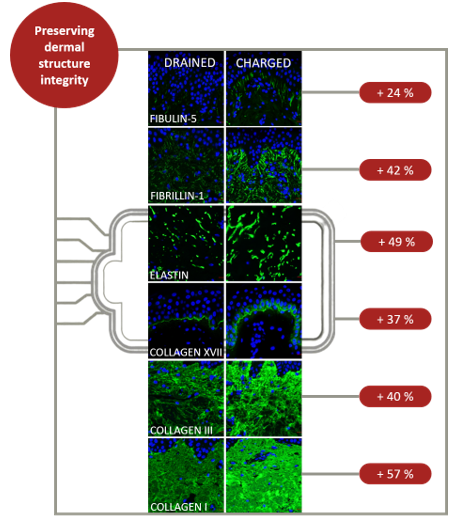
Figure 8: The treatment of human skin explants with SC Complex increases the presence of a large number of essential dermal compounds.
Clinical studies with a focus on volunteers with elevated exposures to screens
“Eye age” is a parameter generated by Haut.AI and represents a numerical age estimate produced by a convolutional neural‑network model that looks only at the ocular region in photographs. It is trained to predict chronological age from cropped patches of the area around the eyes, where lines, wrinkles, pigmentation changes and micro‑texture provide a strong aging signal. “Eye age” is based on the “PhotoAgeClock” research, in which a deep model was trained on thousands of high‑resolution images.
People with a high screentime lifestyle (8+ hours/day) show a significantly higher eye age. These people treated their skin with placebo or verum (containing 3% SkinCharge CLR™) for 3 months. Skin treatment with 3% SC Complex led to a significant reduction of eye age and compensates largely for the extensive exposure to screens (see figure 9). Based on data obtained with 30 volunteers. ** p < 0.01.
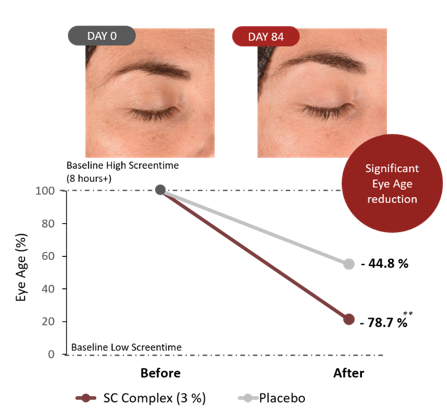
Figure 9: Treatment with SC Complex reduces eye age significantly and largely compensates for increased screentime.
Screentime and digital aging
The high amount of daily screentime leaves its mark on our faces. Facial expressions, tension, and stiffness can affect the formation of wrinkles all over the face.
This is particularly true when facial expressions are continuously influenced. 3% SC Complex has a strong anti-aging effect for digital resilience by reducing fine lines on the cheeks, reducing crow’s feet wrinkles and eye bags whilst enhancing skin’s elasticity and firmness.
Method:
The use of different methods of measurement is essential for providing a 360°-view on the effectiveness of an active ingredient.
Therefore, in the presented studies, different technologies as well as human assessments were performed. Cheeks’ fine lines were determined with Haut.AI.
Crow’s feet wrinkles were determined with AEVA-HE, eyebags and skin elasticity with clinical expert evaluation, and skin firmness by self-evaluation. Parameters were determined on the skin of volunteers with increased screen time.
Results:
The measurable improvement in skin texture, wrinkling, elasticity and firmness is clearly evident in all age groups among the test subjects (see figures 10 and 11). This makes SC Complex a fundamental basis for supporting the skin in every phase of life, as nowadays increased exposure to screens often occurs regardless of age.
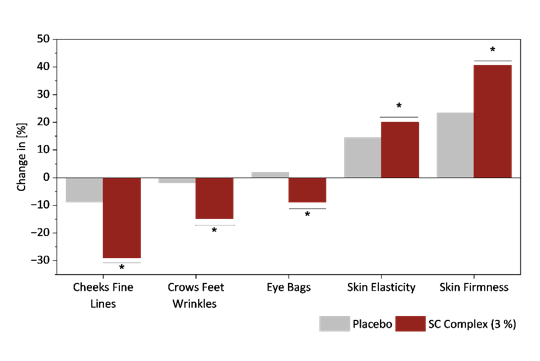
Figure 10: The treatment with SC Complex improves numerous aging-associated skin parameters for people with high screen time.
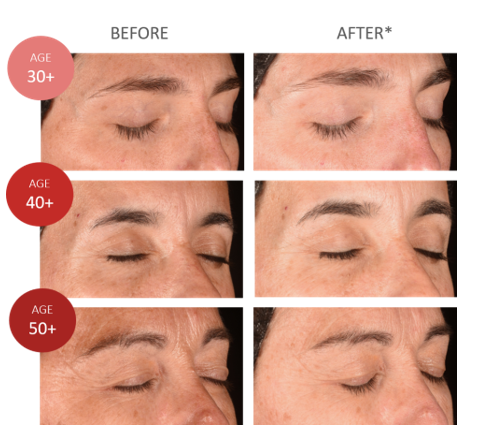
Figure 11: The treatment with SC Complex provides anti-aging benefits for high screentime users of all ages.
Consumer study including screentime behavior tracking and skin feeling
A placebo-controlled 14-day user study was conducted with people who spend a lot of time in front of screens (see figure 12). Volunteers using SC Complex benefited from an uplifted skin feeling despite spending the same amount of time in front of screens (see figure 13).
With this new approach of behavior tracking a link can be made to cosmetic properties and the kind of consumer that benefits from using and integrating this active in his or her personal lifestyle.
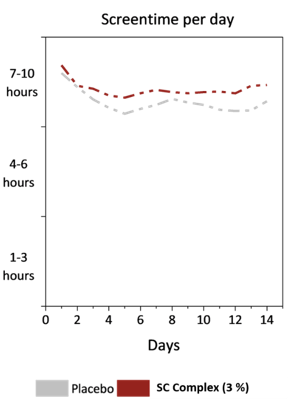
Figure 12: The reported average numbers of hours of screentime in the study.
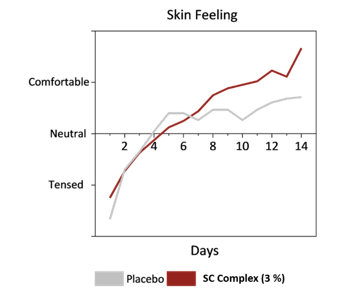
Figure 13: The treatment with SC Complex improves skin comfort over 14 days and outperforms placebo
Modern lifestyles include an excessive amount of screentime. In fact, the number of hours the average person spends behind a digital screen is higher than the combined hours we eat and sleep. The implications of this behavior are abundant.
Digital eye strain, where the eye area can dry out and become inflamed, is a common phenomenon. Other consequences of high screentime include reduced quality of sleep. It is not surprising that high screentime users show an accelerated skin aging phenotype, which the modern consumer is increasingly aware of.
SC Complex was developed to provide important support for the facial skin of the high screentime user. In numerous in vitro, ex vivo, and in vivo studies, it could be shown that SC Complex enables the skin to compensate for the accelerated aging processes taking place in the skin of people who spend a large number of hours behind a digital screen every day.
Are you interested in receiving a sample of these ingredients for your formulations?
Complete the following form and the distributor in your country will contact you.

Autores:
Dra. Jule Lexa Völzke, Harald van der Hoeven
Chemisches Laboratorium Dr. Kurt Richter (CLR) GmbH
Fuentes: Da Silva, E. V., & Pereira, S. (2020). Digital life: relationships between young people and technology. 16(2), 113–39. https://doi.org/10.5007/1807-9288.2020V16N2P113
Falbe J, Davison KK, Franckle RL, Ganter C, Gortmaker SL, Smith L, Land T, Taveras EM. Sleep duration, restfulness, and screens in the sleep environment. Pediatrics. 2015 Feb;135(2):e367–75. doi: 10.1542/peds.2014-2306. Epub 2015 Jan 5. PMID: 25560435; PMCID: PMC4306800.
Romeo, M. A., Coco, G., Taloni, A., Carnovale‐Scalzo, G., Scorcia, V., & Giannaccare, G. (2024). Digital Applications for Videoterminal-Associated Dry Eye Disease. Vision, 8(4), 67. https://doi.org/10.3390/vision8040067
NIU, L., & WANG, Y. (n.d.). Inflammatory Mechanisms in the Pathologic Lesions of Dry Eye. https://doi.org/10.3706/cma.j.issn.1673-5803.2013.05.005
Hutchings, P. (2022). Adolescence Obesity Risk Increases with Increased Screen Time: A Systematic Review and Dose-Response Meta-Analysis. https://doi.org/10.21203/rs.3.rs-1267652/v1
Lai, CF., Esam, G., Lin, YC. et al. From destruction to protection: rethinking MMP-1 in skin aging and anti-aging strategies. Arch Dermatol Res 318, 56 (2026). https://doi.org/10.1007/s00403-025-04518-y